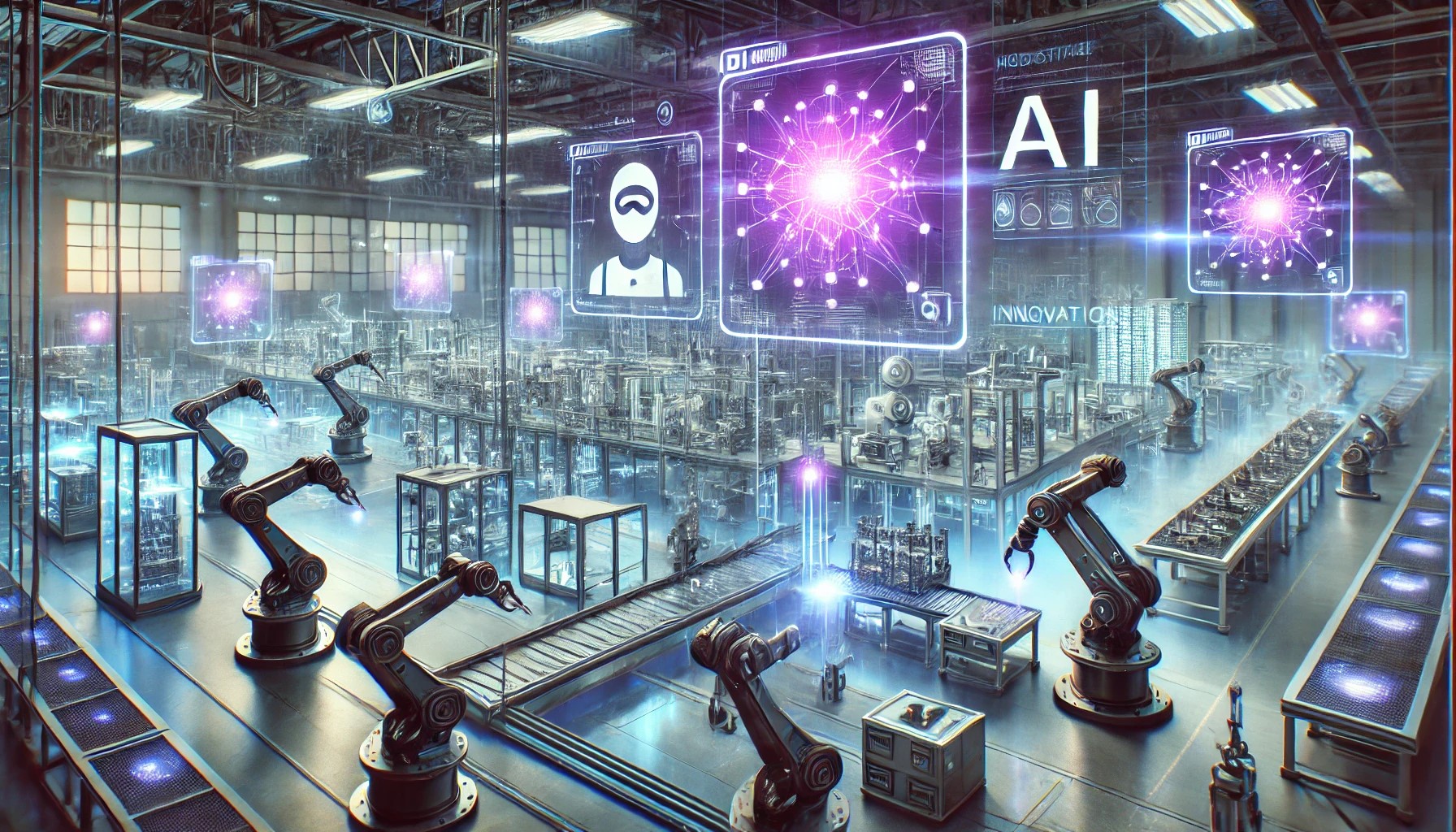
Manufacturing
The manufacturing industry is at the cusp of a new industrial revolution, driven by the need for greater efficiency, precision, and flexibility in production processes. As global competition intensifies and consumer demands become more complex, manufacturers must innovate to stay ahead.
Generative AI is emerging as a pivotal technology that can revolutionize the way products are designed, produced, and delivered.
By integrating Generative AI into manufacturing processes, companies can optimize production, reduce costs, and accelerate innovation, all while maintaining the highest standards of quality and customization.
The logistics sector is the lifeblood of global trade and commerce, responsible for the seamless movement of goods across vast distances and through complex supply chains. As e-commerce continues to boom and consumer expectations for faster, more reliable deliveries increase, the logistics industry faces immense pressure to innovate.
Generative AI is emerging as a powerful tool that can transform logistics operations, offering solutions to optimize routes, manage inventory, reduce costs, and improve overall efficiency. By integrating Generative AI, logistics companies can stay ahead of the curve, ensuring that goods move more efficiently, sustainably, and accurately across the globe.
Top 10 Generative AI Applications Transforming Manufactoring
1. Generative Design
Creating innovative product designs by exploring thousands of design variations that meet specific performance criteria.
2. Predictive Maintenance
Using AI to predict equipment failures before they happen, minimizing downtime and extending machinery lifespan.
3. Supply Chain Optimization
|Enhancing supply chain efficiency with AI-driven demand forecasting, inventory management, and logistics planning.
4. Quality Control Automation
Automating the inspection process with AI to detect defects and ensure consistent product quality.
5. Smart Manufacturing
Implementing AI in production lines to optimize workflows, reduce waste, and increase productivity.
6. Process Optimization
Analyzing production processes with AI to identify inefficiencies and suggest improvements in real-time.
7. Energy Management
Reducing energy consumption and costs by using AI to optimize energy use across manufacturing facilities.
8. AI-Powered Robotics
Enhancing the capabilities of robots on the factory floor, enabling them to perform complex tasks with greater precision.
9. Supply Chain Risk Management
Identifying and mitigating risks in the supply chain with AI-driven insights and predictive analytics.
10. Personalized Manufacturing
Using AI to enable mass customization, allowing manufacturers to produce tailored products at scale.
In the manufacturing sector, Generative AI is not just about improving efficiency—it’s about unlocking new possibilities for innovation and growth.
By adopting AI-driven solutions, manufacturers can stay competitive in a rapidly changing market, delivering higher-quality products faster and more sustainably than ever before.