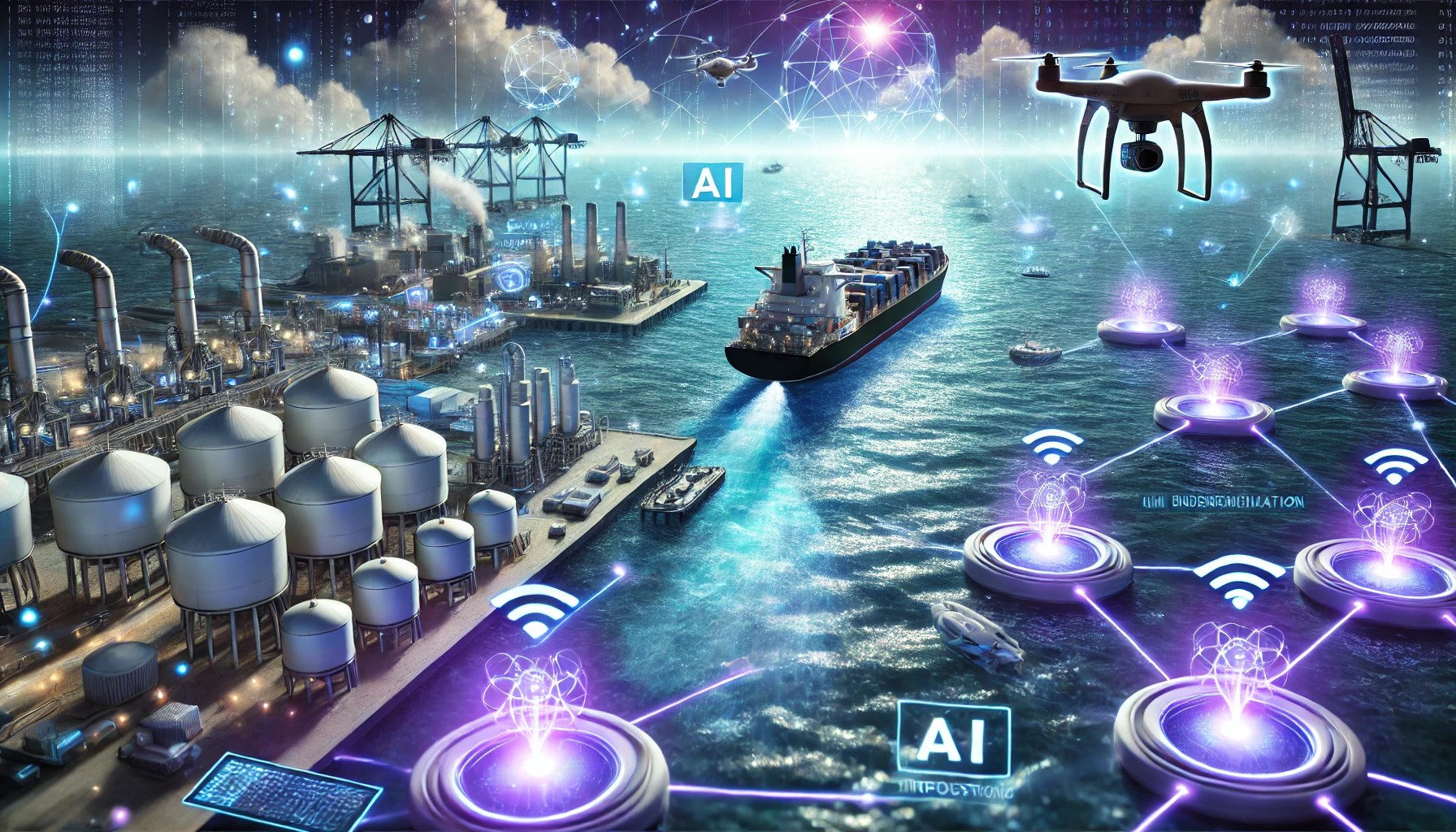
Water and Maritime
The water and maritime sector is essential for global trade, environmental management, and the sustainable use of our planet’s most vital resource—water. From managing waterways and ports to ensuring the safety and efficiency of maritime transport, this sector faces complex challenges, including climate change, rising sea levels, and the need for sustainable practices.
As these challenges intensify, innovation becomes crucial. Generative AI is emerging as a powerful tool that can transform the water and maritime industry by optimizing operations, enhancing safety, and promoting sustainability.
By integrating Generative AI, organizations in this sector can lead the way in developing smarter, more resilient, and environmentally responsible practices.
The logistics sector is the lifeblood of global trade and commerce, responsible for the seamless movement of goods across vast distances and through complex supply chains. As e-commerce continues to boom and consumer expectations for faster, more reliable deliveries increase, the logistics industry faces immense pressure to innovate.
Generative AI is emerging as a powerful tool that can transform logistics operations, offering solutions to optimize routes, manage inventory, reduce costs, and improve overall efficiency. By integrating Generative AI, logistics companies can stay ahead of the curve, ensuring that goods move more efficiently, sustainably, and accurately across the globe.
Top 10 Generative AI Applications Transforming Water and Maritime
1. Predictive Maintenance for Vessels
Using AI to anticipate maintenance needs for ships and maritime equipment, reducing downtime and extending the life of assets.
2. Optimized Shipping Routes
Leveraging AI to analyze weather, sea conditions, and traffic to determine the most efficient and safe shipping routes, reducing fuel consumption and emissions.
3. Port Management Automation
Implementing AI-driven systems to optimize port operations, from cargo handling to vessel scheduling, enhancing efficiency and throughput.
4. AI-Powered Flood Risk Management
Using AI to predict and manage flood risks by analyzing environmental data, enabling proactive measures to protect coastal areas and infrastructure.
5. Water Resource Management
Optimizing the use and distribution of water resources with AI, ensuring efficient irrigation, consumption, and conservation.
6. Sustainable Fishing Practices
Using AI to monitor fish populations and ecosystems, promoting sustainable fishing practices and preventing overfishing.
7. Environmental Monitoring and Protection
Employing AI to track pollution, monitor water quality, and protect marine ecosystems, ensuring compliance with environmental regulations.
8. Autonomous Maritime Vessels
Developing AI-driven autonomous ships and underwater vehicles for tasks such as surveying, monitoring, and transporting goods, improving safety and efficiency.
9. AI-Assisted Search and Rescue Operations
Enhancing the effectiveness of search and rescue missions with AI tools that analyze vast amounts of data to locate vessels or individuals in distress more quickly.
10. Smart Water Infrastructure
Implementing AI to manage and monitor water distribution networks, reducing leaks, improving efficiency, and ensuring clean water supply.
In the water and maritime sector, Generative AI is not just an advancement—it’s a key to unlocking a more sustainable and efficient future.
By adopting AI-driven technologies, this sector can improve operational efficiency, enhance safety, and protect vital water resources, ensuring that it remains resilient and capable of meeting the challenges of the 21st century.