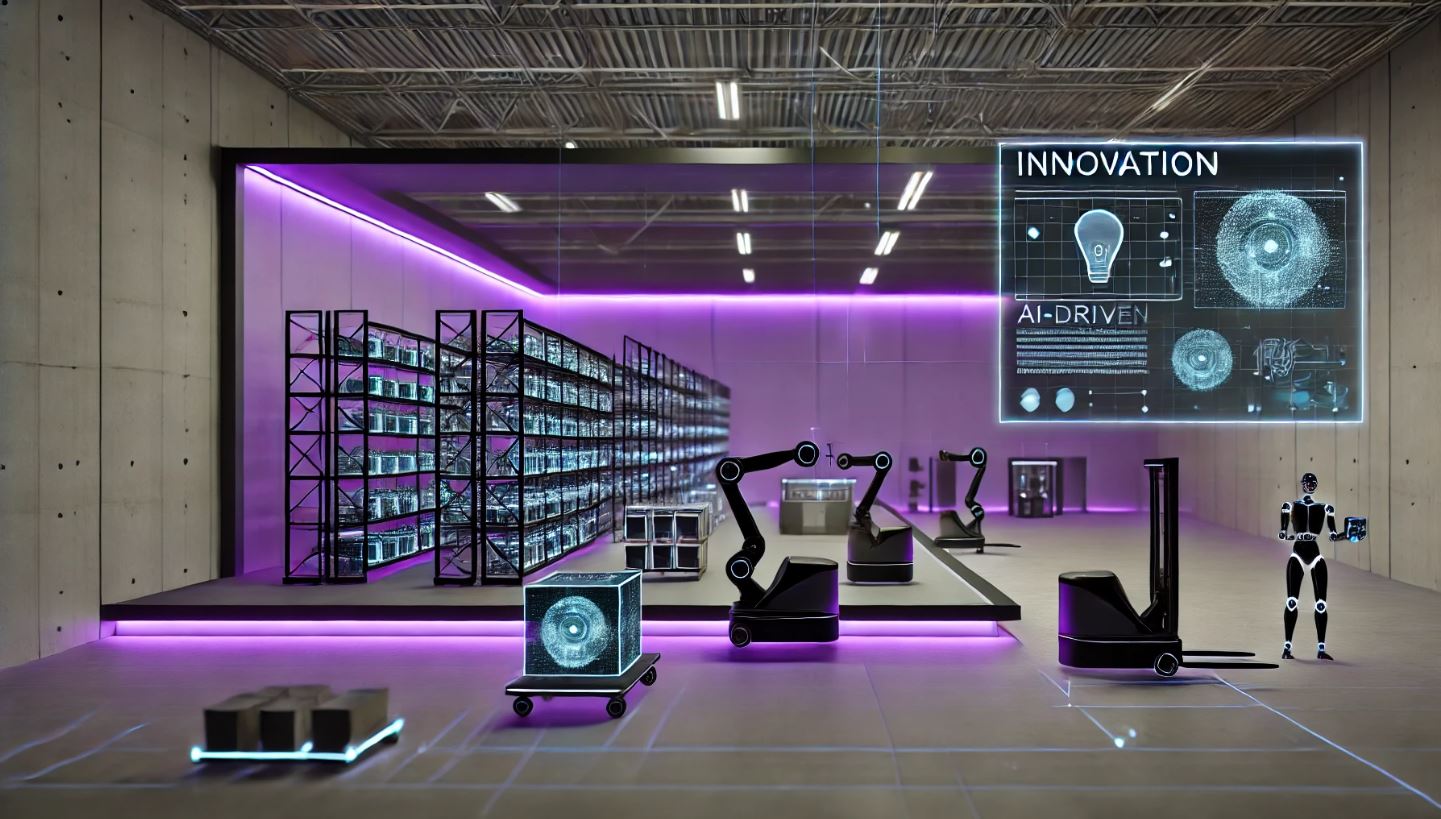
Warehouse Operations Division
The warehouse department is the backbone of an organization’s supply chain, responsible for the efficient storage, handling, and distribution of goods. As businesses grow and consumer expectations for fast, accurate deliveries continue to rise, warehouse operations face increasing pressure to optimize processes and improve efficiency. Generative AI is emerging as a transformative force in the warehouse, offering advanced solutions to streamline operations, enhance inventory management, and reduce costs. By integrating Generative AI, warehouse teams can achieve higher levels of productivity, accuracy, and agility, ensuring that the right products are delivered to the right place at the right time.
Top 10 Generative AI Applications Transforming Warehousing
1. Automated Inventory Management
Using AI to track inventory levels in real-time, optimize stock replenishment, and reduce the risk of overstock or stockouts.
2. Warehouse Layout Optimization
Leveraging AI to design the most efficient warehouse layouts, minimizing travel time and maximizing space utilization.
3. Predictive Maintenance for Equipment
Employing AI to predict when warehouse machinery, such as forklifts and conveyor belts, will need maintenance, reducing downtime and extending equipment life.
4. AI-Powered Order Picking
Implementing AI-driven systems to optimize order picking routes and methods, improving picking accuracy and reducing fulfillment times.
5. Automated Quality Control
Using AI to inspect products for defects and ensure quality standards are met before shipping, reducing returns and enhancing customer satisfaction.
6. Dynamic Workforce Management
Leveraging AI to optimize workforce allocation based on real-time demand and task complexity, improving labor efficiency and reducing operational costs.
7. Real-Time Tracking and Visibility
Providing real-time visibility into inventory and order status with AI, enabling better decision-making and faster response to issues.
8. Energy Efficiency Optimization
Using AI to monitor and optimize energy consumption in the warehouse, reducing costs and supporting sustainability initiatives.
9. AI-Driven Demand Forecasting
Enhancing demand forecasting with AI to ensure the warehouse is always stocked with the right products in the right quantities, improving service levels.
10. Robotic Process Automation (RPA)
Implementing AI-powered robots for repetitive tasks such as sorting, packing, and palletizing, increasing throughput and reducing human error.
In the warehouse department, Generative AI is more than just an innovation—it’s a strategic advantage that transforms how goods are managed and moved. By adopting AI-driven technologies, warehouse teams can enhance their operations, improve accuracy, and respond more effectively to the demands of today’s fast-paced market. This technology empowers warehouses to operate with greater precision, speed, and flexibility, ensuring that the supply chain runs smoothly and efficiently, ultimately contributing to the overall success of the organization.